Key takeaways
- Real tournament: March only — the Haru Basho runs 15 days each March at Edion Arena. How to get tournament tickets.
- Year-round shows run every week from $56 — what you get is a sumo show with retired rikishi, not a real tournament. Compare all four shows.
- The flagship show is the safest pick (4.8★, $59, most interactive) — read what guests say.
- Genuine morning practice is basically Tokyo-only. Most year-round 'practice' tours are shows dressed up. The honest answer about keiko in Osaka.
- Box seats at the tournament let you eat and drink during the bouts. See what's allowed at sumo.
What the live-show experience includes
The flagship show at Sumo Studio Osaka — what happens and what's in the price.
What happens
- Arrive at Sumo Studio Osaka (Exit 4, Hanazonochō Station)
- Learn sumo ranks and rules from a live guide
- Watch exhibition bouts with retired rikishi
- Go one-on-one: audience member challenges a wrestler
- Photo with the wrestlers
What’s included
- English-speaking live guide throughout
- Interactive audience participation
- Wheelchair accessible
- Free cancellation up to 24 hours before
- Reserve now, pay later
Anatomy of a sumo show, in order
The typical progression from arrival to finish — what happens at each stage.
A sumo show at any of the four venues follows the same broad shape: you arrive, settle in, learn the rules through explanation and live bouts, get a chance to test yourself against a wrestler, meet the performers, and — depending on the ticket — share a meal.
- Arrival & seating — You arrive 15 minutes early and are shown to your seat or standing spot.
- Welcome & rules breakdown — A guide or MC explains sumo's basics: ranks, legal moves, forbidden techniques, the ring ritual.
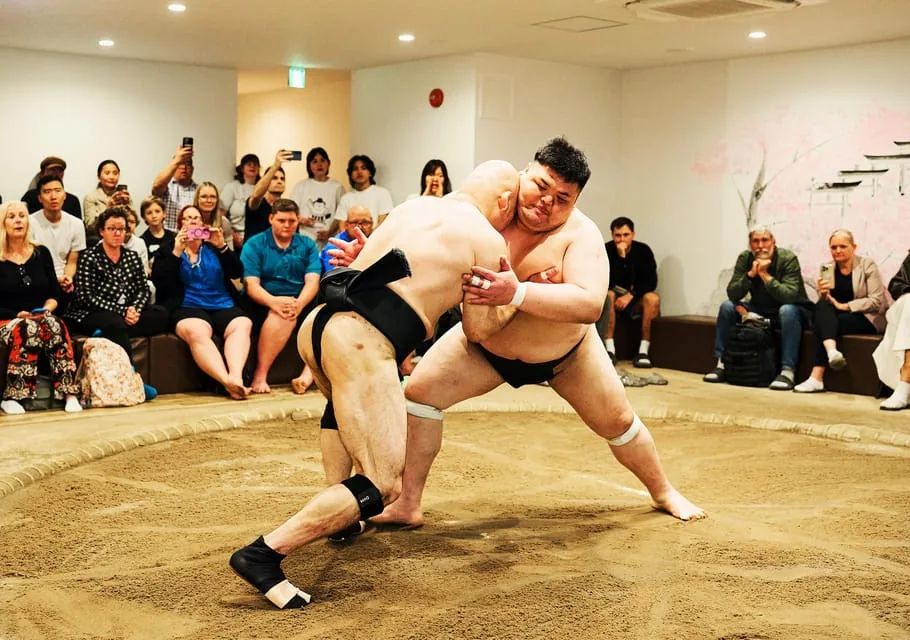
- Exhibition bouts — Retired or semi-retired rikishi perform live bouts — real wrestling, not theatre.
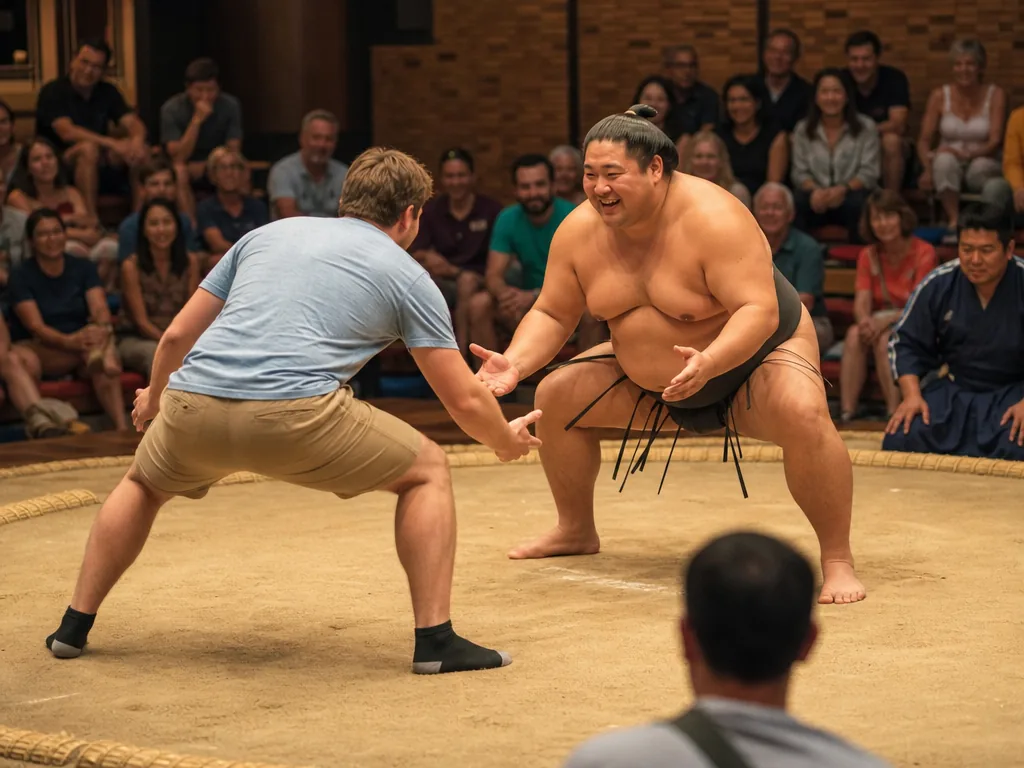
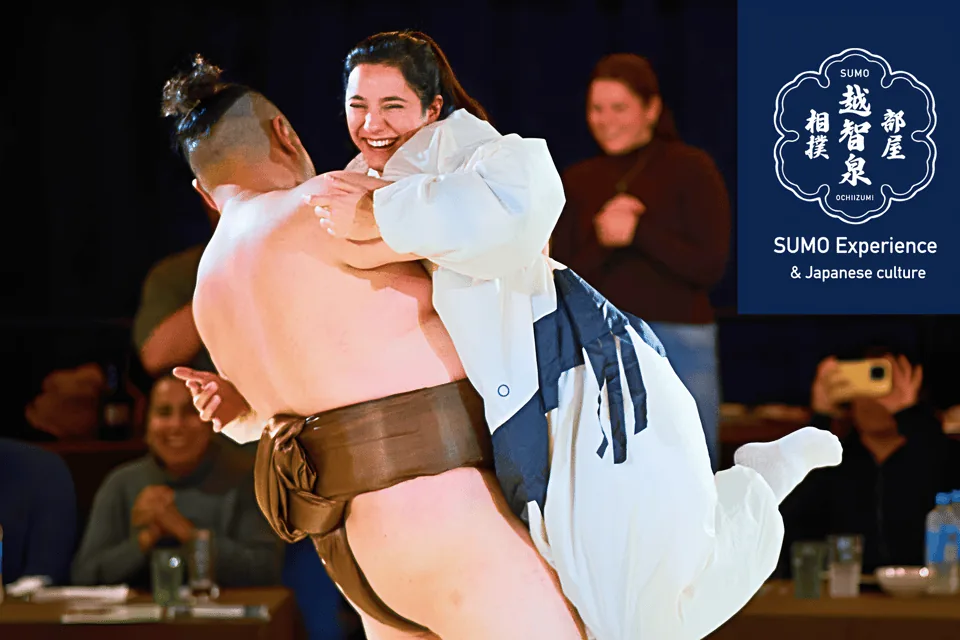
- Audience challenge — A member of the audience is invited to test themselves in the ring against a wrestler.
- Q&A & stories — Wrestlers answer questions; guides share facts about training, diet, and stable life.
- Photos with wrestlers — Meet the performers, take pictures, get autographs.
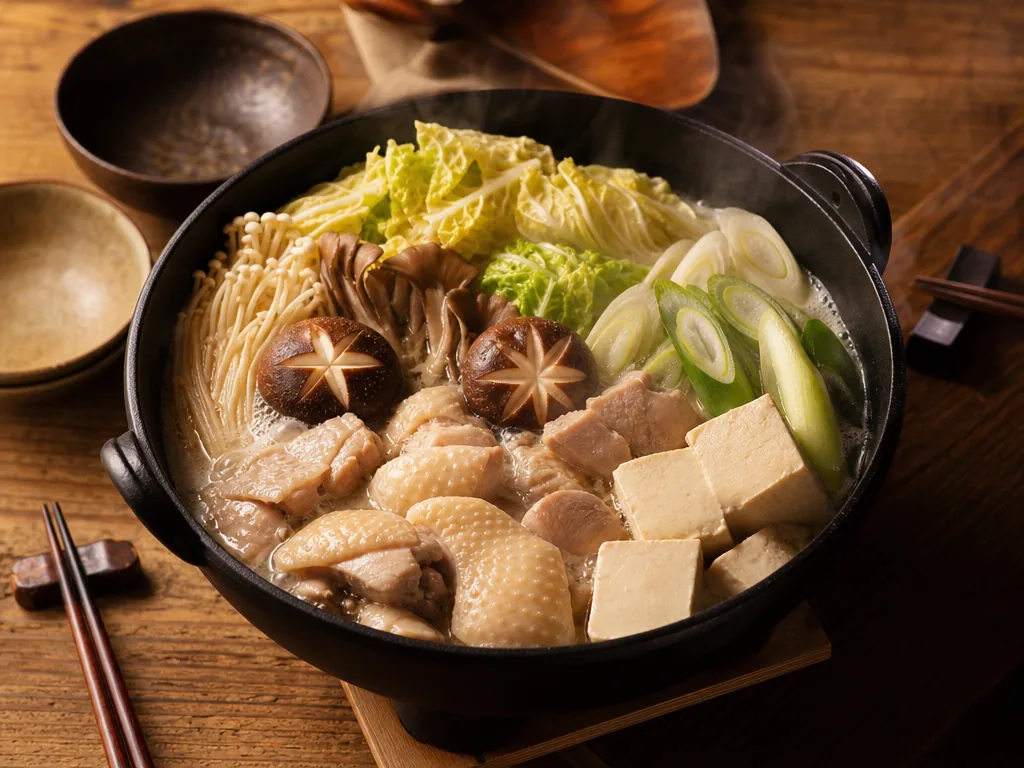
- Optional meal — Chanko nabe (hot pot) or wagyu sukiyaki, depending on your ticket tier.
The whole show runs 1–2.5 hours depending on the venue and meal plan. Most are run by retired wrestlers who know the sport and have a real audience. See what a typical day looks like.
How booking works
Pick your show
We help you choose: central venue, airport-close, or dinner-focused.
Check live times
See real availability and prices from GetYourGuide.
Book in seconds
Reserve now, with free cancellation on most shows.
Just turn up
Your confirmation has the meeting point, time, and what to bring.
Book a sumo show in Osaka
The live show is the most popular and highest-rated choice — interactive, central, and the safest pick.
Which Osaka sumo show is right for you?
Three very different experiences — here's how they compare.
| Most popularOsaka: Sumo Experience with Live Show & Audience Challenge | Osaka: Sumo Show with Bento or Snack at Sumo Hall Hirakuza | Osaka Sumo Show with Front-Row Seating & Wagyu Sukiyaki | |
|---|---|---|---|
| Price | $59 | $89 | $111 |
| Duration | 1–1.5 hrs | 2 hrs | 2.5 hrs |
| Location | Hanazonochō | Namba Parks | Near KIX airport |
| Meal included | No | Bento | Wagyu sukiyaki |
| Audience challenge | Yes | Lottery | Yes |
| Rating | 4.8 | 4.4 | 4.7 |
| Best for | Interactive first-timer | Families & couples | Dinner & show |
| Book this → | View → | View → |
Photo Gallery
Sumo in Osaka — through the lens
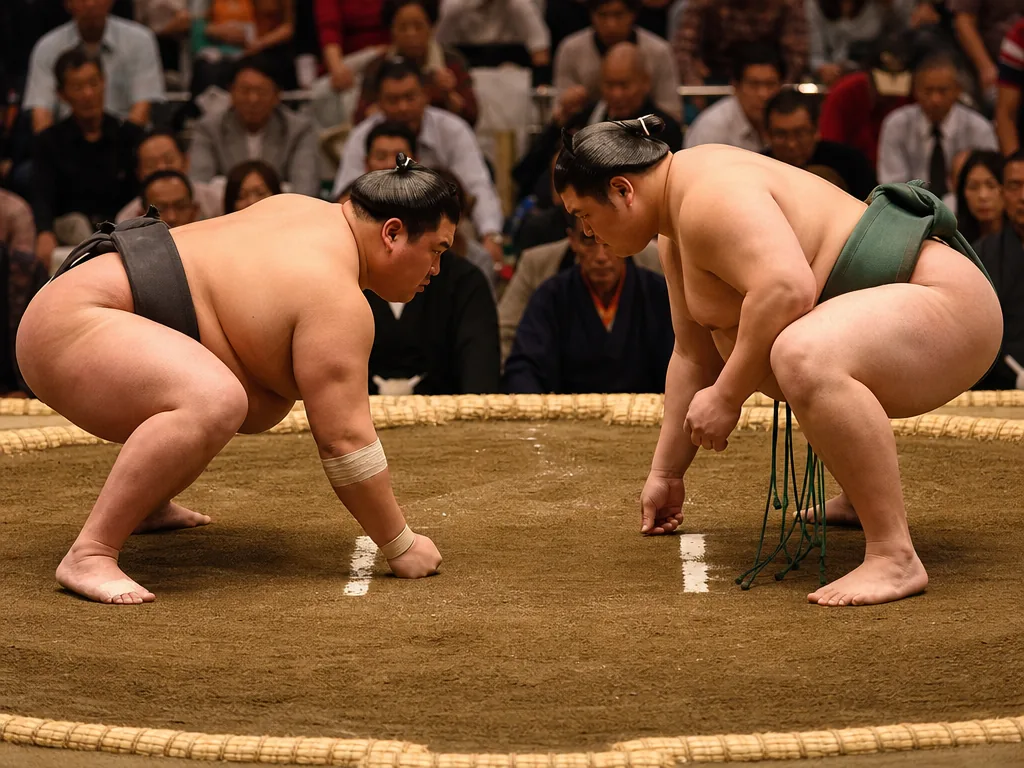
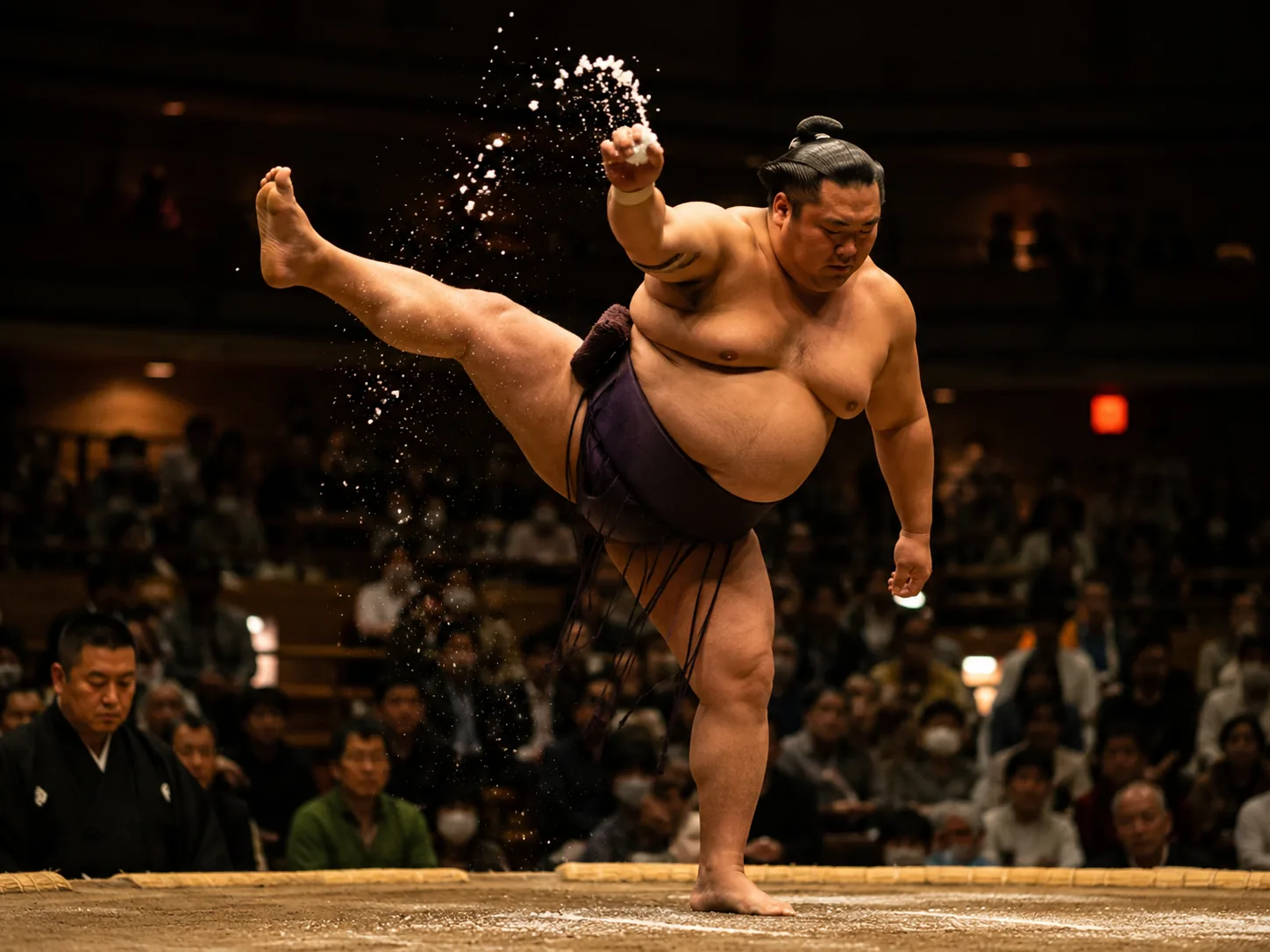
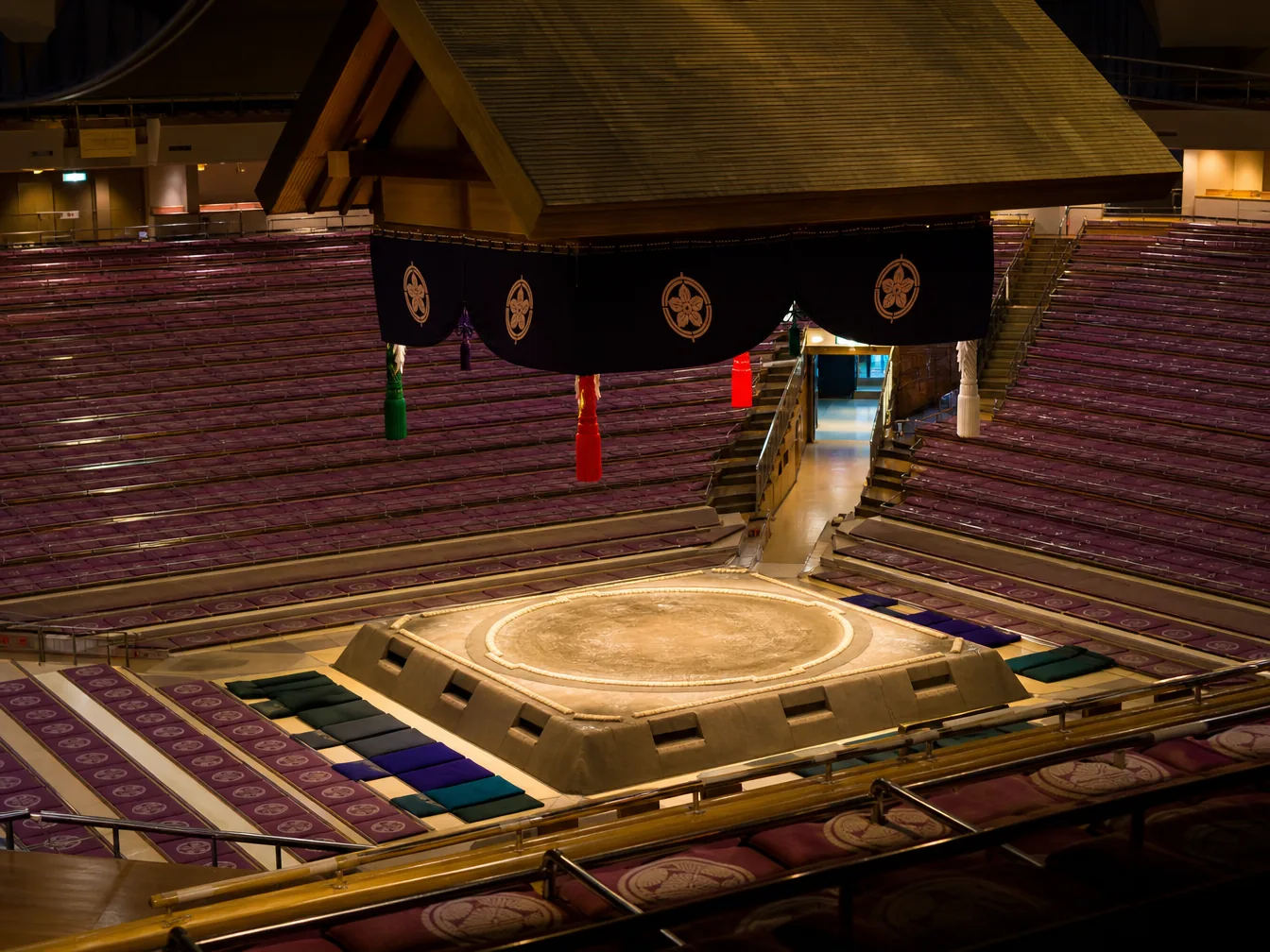
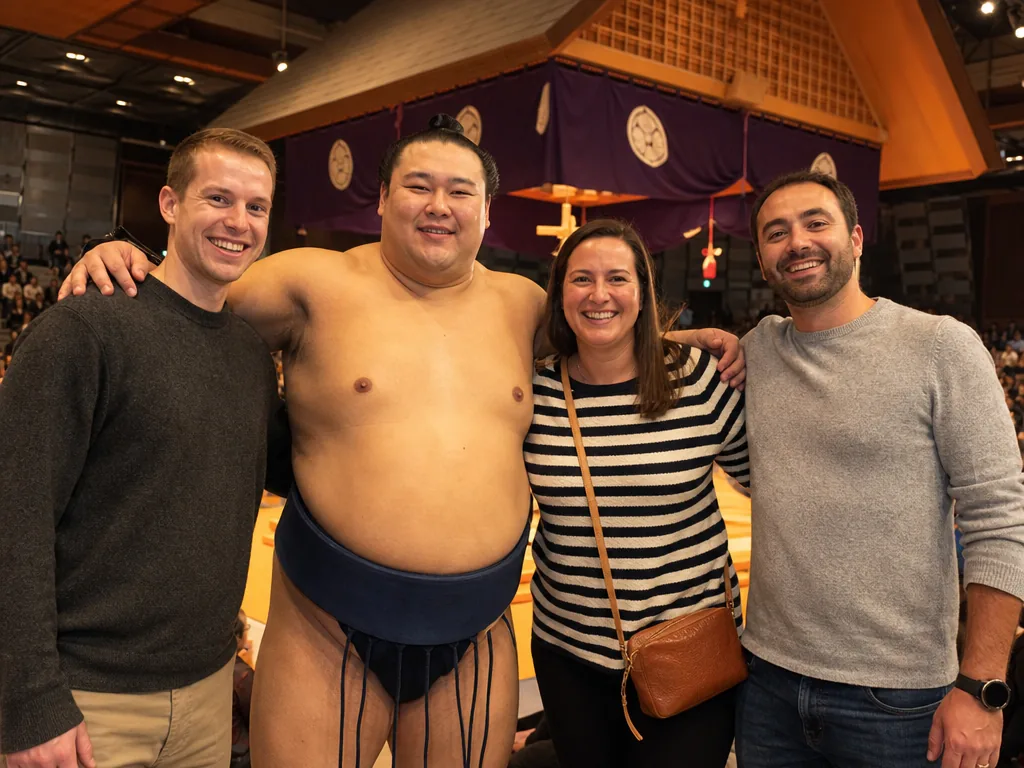
A glimpse of what you see on the year-round shows and at the March tournament.
Popular sumo shows in Osaka
All four year-round experiences — from $56 to $111, each with a different angle.
 Highest rated
Osaka: Sumo Experience with Live Show & Audience Challenge
 Show + hot pot
The Way of Sumo: Authentic Show, Try Sumo & Chanko Hot Pot
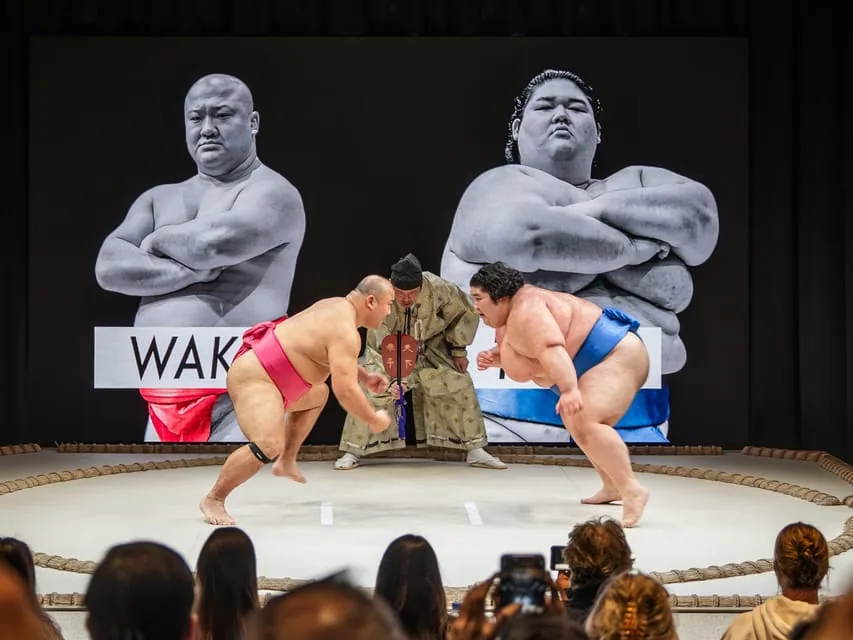 Central Namba
Osaka: Sumo Show with Bento or Snack at Sumo Hall Hirakuza
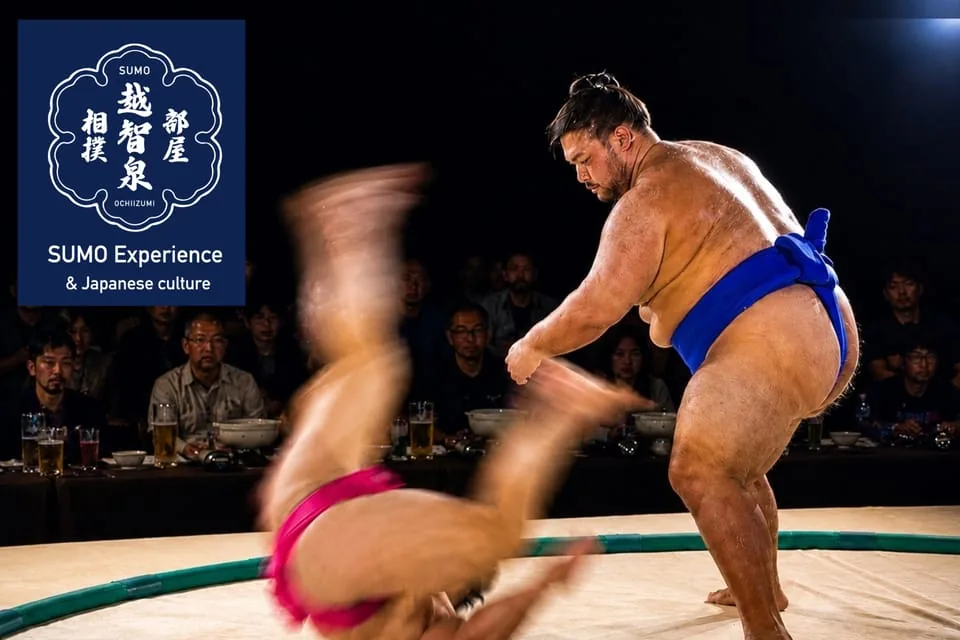 Front-row + wagyu
Osaka Sumo Show with Front-Row Seating & Wagyu Sukiyaki
What guests say about the Osaka sumo shows
Reviews from travellers who booked the shows we feature.
Very educational and interactive, we learned lots. Excellent and fabulous fun.
Amazing and fun, learned how much training it takes, got great pictures.
Entertaining and humorous, learned about sumo. The wrestlers were great.
Best thing I did in Japan — totally worth every penny.
Very interactive and fun. Wrestlers and MC really nice, informative and entertaining.
One of the best experiences in Japan. Polite staff, amazing food.
Ratings and reviews are the operators’ live GetYourGuide figures. Read our full tour reviews ›
Quick answers before you book
A few things worth knowing so you enjoy the show, not waste time asking questions.
Tournament or show?
The March Haru Basho is a real championship with top wrestlers. Year-round shows are exhibitions with retired rikishi. Different experiences; both worth it if you're in town.
Can I see sumo outside March?
Yes. All four shows here run year-round. They're not real tournaments, but they're genuine wrestling with explanation. Compare the four shows.
Which show should I pick?
Most visitors pick the live show ($59, most interactive, central). On a budget, go for chanko ($56). Want dinner? Pick wagyu ($111). See what each includes.
How long is a show?
1 to 2.5 hours depending on the venue and meal. Here's what a typical show looks like, minute by minute.
Can’t make these dates?
Browse more available sumo in osaka and find one that fits your schedule — all with instant confirmation and free cancellation.
Sumo in Osaka, explained
I’ve been to the Haru Basho nearly every March since I was a kid, and I’ve sat through every year-round sumo show Osaka has to offer to work out which are worth a visitor’s money. Here’s what I’ve learned: the real tournament is unbeatable if you’re in town in March, but the rest of the year the shows are genuinely fun, and the honest facts make the difference between a great night and a disappointed one.
Tournament or show: the main thing you need to know
Osaka hosts one of Japan’s six Grand Sumo Tournaments — the Haru Basho, every March, 15 days, at Edion Arena in Namba. I’ve watched it since childhood. Top wrestlers from across Japan come here; the matches are real, the tension is high, and if you can get a ticket, it beats anything else. But most weeks you’re visiting Osaka, there is no tournament. There’s no real tournament anywhere in Japan outside the six tournament weeks. The wrestlers live and train in Tokyo; they only come to Osaka in March. So if you’re visiting in April, July, September, whenever — you can’t see a real tournament. What you can book is a sumo show: a performance by retired rikishi or semi-retired wrestlers, with a live exhibition, audience participation, often a meal, and full explanation. It’s different from the tournament, but it’s still real wrestling, and it’s still worth going to. You just need to know which thing you’re getting. Most of the confusion I see comes from people expecting a championship and getting a show instead.
The March Haru Basho: how it works
The tournament runs 15 days, usually the second Sunday of March to the fourth Sunday. The venue is Edion Arena Osaka (the Osaka Prefectural Gymnasium) in Namba, next to Nankai Namba Station. A tournament day runs all day: the lowest ranks wrestle from about 8:30 am, the top division (makuuchi) fights from roughly 3:30 pm to 6:00 pm. Most spectators arrive mid-afternoon for the top wrestlers. Each wrestler fights once a day.
Tickets go on sale roughly a month before. There are three main seat types: balcony seats (cheapest), masu-seki (four-person tatami boxes on the floor where you can eat and drink), and tamari-seki (ringside cushions, the premium option, no eating allowed). Same-day tickets for the upper balcony are sold at the box office from early morning and often sell out fast. For exact 2026 prices, check the official Japan Sumo Association site — I don’t list yen figures because they fluctuate.
The four year-round shows and who each suits
The Osaka Sumo Experience with Live Show ($59, most-reviewed) runs at Sumo Studio Osaka, directly in front of Exit 4, Hanazonochō Station. It’s central, runs 1–1.5 hours, with an English-speaking guide, live bouts, an audience challenge, and a photo with the wrestlers. This is the safe default. Most first-timers pick this one, and the 4.8 rating and 1,200+ reviews speak for themselves.
The Way of Sumo with Chanko ($56, cheapest) is at Ochiizumibeya, 5 minutes from Kansai International Airport. Good if you’re catching a flight or staying near KIX. Small group, optional chanko nabe or wagyu, optional kimono try-on, in-ring photo. The base price is show-only (meal not included unless you add it), so some reviewers expected food included — that’s why it’s 4.5 stars instead of higher.
Sumo Hall Hirakuza ($89, central) sits on the 8th floor of Namba Parks, next to Nankai Namba Station. Two hours, ticket includes a bento or snack, the show, a photo, and a chance to enter the sumo-challenge lottery. Popular with families and couples. Non-refundable (the trade-off for the lower price).
Osaka Sumo Show with Front-Row Seating & Wagyu ($111, premium) is at Ochiizumibeya, 5 minutes from KIX. Evening show, front-row VIP seats, black wagyu sukiyaki dinner, optional drinks, hands-on training (shiko, suri-ashi footwork), and in-ring photo. 2.5 hours. Newest tour, fewest reviews (39), but 4.7 rating. Best if you want dinner and a full evening.
Morning practice: the honest answer
People ask me all the time: "Can I see a sumo stable and morning practice in Osaka?" The answer is basically no. The real sumo stables are almost all in Tokyo, in the Ryōgoku district. Wrestlers train there year-round. They only come to Osaka for March. So genuine morning-practice viewing is March-only, and even then it’s hard to arrange. Most tours listed online as "practice" or "stable visits" are either seasonal or come and go. The reliable thing you can book year-round is the show I described above — it includes explanation of training, diet, and stable life, but it’s not the same as watching keiko in a real stable. Be clear on that before you book.
The rules, the moves, and what happens in the ring
You win by forcing your opponent out of the ring or making him touch the ground with anything other than the soles of his feet. Legal moves: open-palm slapping, pushing, tripping, throwing, and grabbing the legs. Illegal: closed-fist punching, hair-pulling, eye-gouging, choking, and grabbing the mawashi (belt). The dohyō is a raised clay ring topped with a suspended roof and four coloured tassels. Women are not permitted to enter the ring — a long-standing tradition. There’s the "dead body" rule (shinitai): if a wrestler is already in an unrecoverable falling position, his opponent can win even if the opponent touches down first. All this is explained at the shows, so don’t memorise it.
What to wear, what to eat, when to go
There’s no dress code — wear whatever’s comfortable. If you book a box seat at the tournament, you sit on cushions, so easy-to-remove shoes help. At the year-round shows, dress casually. Chanko nabe is the sumo staple food — a protein-heavy hot pot that wrestlers eat enormous amounts of to build mass. At the tournament, box seats let you bring or buy a bento and beer and eat during the bouts. At the shows, it depends on the ticket. Best time to visit: mid-to-late March for the real tournament. Otherwise any week works year-round.
The bottom line
If you’re visiting in March, book the Haru Basho. It’s real sumo at the highest level, and it’s the best sports ticket in Japan. If you’re visiting any other week, book one of the four year-round shows — they’re fun, informative, and give you a genuine feel for the sport without the tournament hype. Pick based on location (central Namba or near KIX?), meal preference, and budget. Any of the four is worth the money.
Frequently asked questions
Can you see sumo in Osaka?
Yes. In March, the real Haru Basho Grand Tournament runs at Edion Arena. Year-round, you can book one of four sumo shows with retired wrestlers. Different experiences.
What's the difference between a tournament and a show?
The March Haru Basho is the real thing: the top wrestlers in Japan competing. Year-round shows are exhibitions by retired rikishi. Both involve live wrestling; both are worth going to if you're in town.
How much does a sumo show cost in Osaka?
Shows range from $56 to $111 per person. The live-show experience is $59 (most interactive), the wagyu dinner show is $111. Here's what each includes and prices explained.
Which months have sumo in Osaka?
The tournament is March only (15 days). Shows run year-round every week. No tournament outside March.
Are females allowed in sumo?
Women can attend tournaments and shows as spectators. Women are not permitted to enter the dohyō (ring) — a long-standing tradition.
Can you drink at a sumo show or tournament?
Yes. At the tournament, you can bring or buy beer and snacks if you have a box seat (masu-seki). At the year-round shows, drinks depend on the venue.
What should I wear to see sumo?
There's no dress code — wear whatever's comfortable. In box seats you sit on cushions, so easy-to-remove shoes help.
Is there sumo in Osaka or Kyoto?
Only Osaka. Kyoto has no sumo of its own, but you can day-trip by bullet train (15 minutes) to Osaka for the March tournament or a year-round show.
Still have questions? Email us [email protected]